LabCore Materials
Solid-State Battery Test Mold with Locking Ring | Compact
Locking-ring split-cell mold with quick pressure release, optimized for frequent sample changes and glovebox operation in all-solid-state battery research.
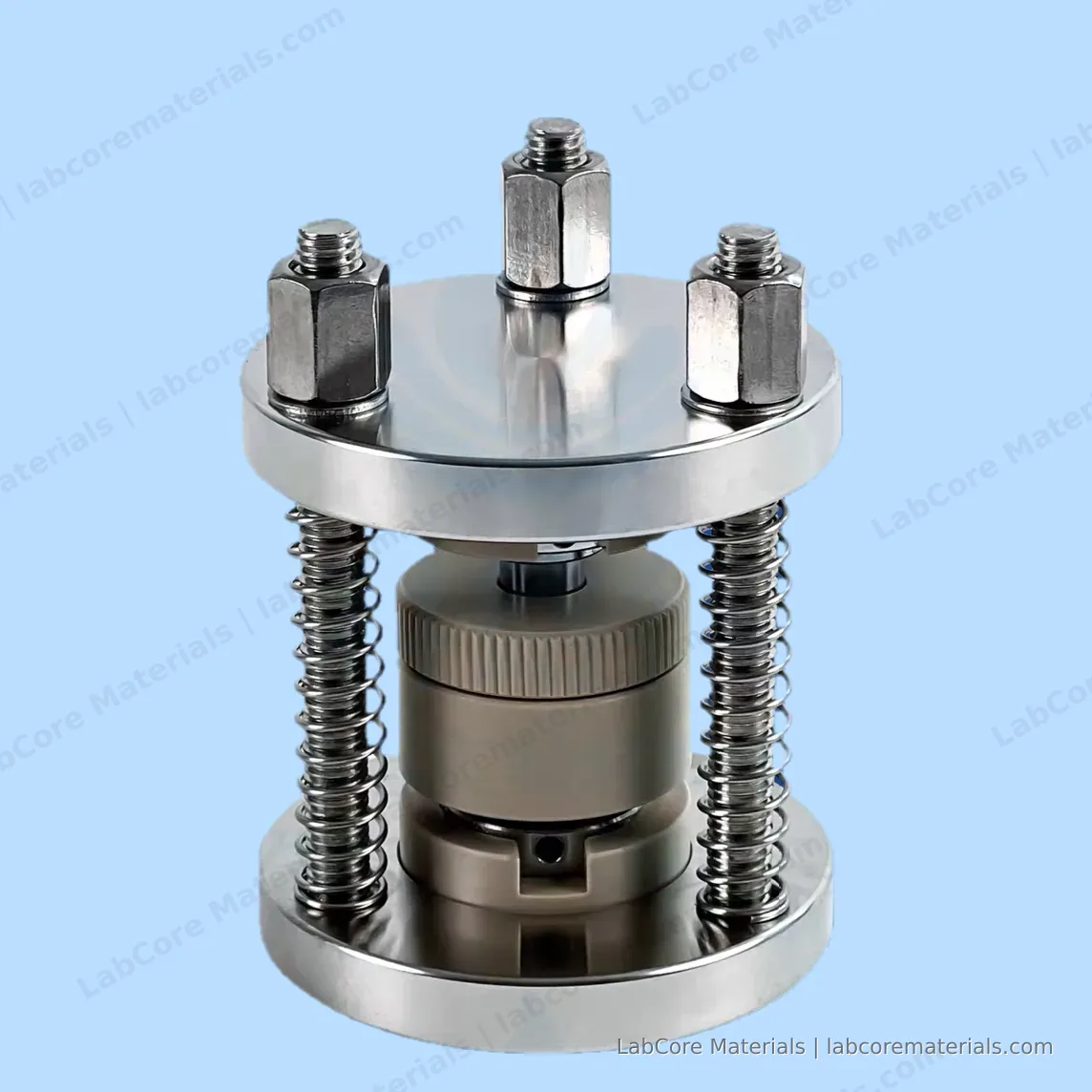
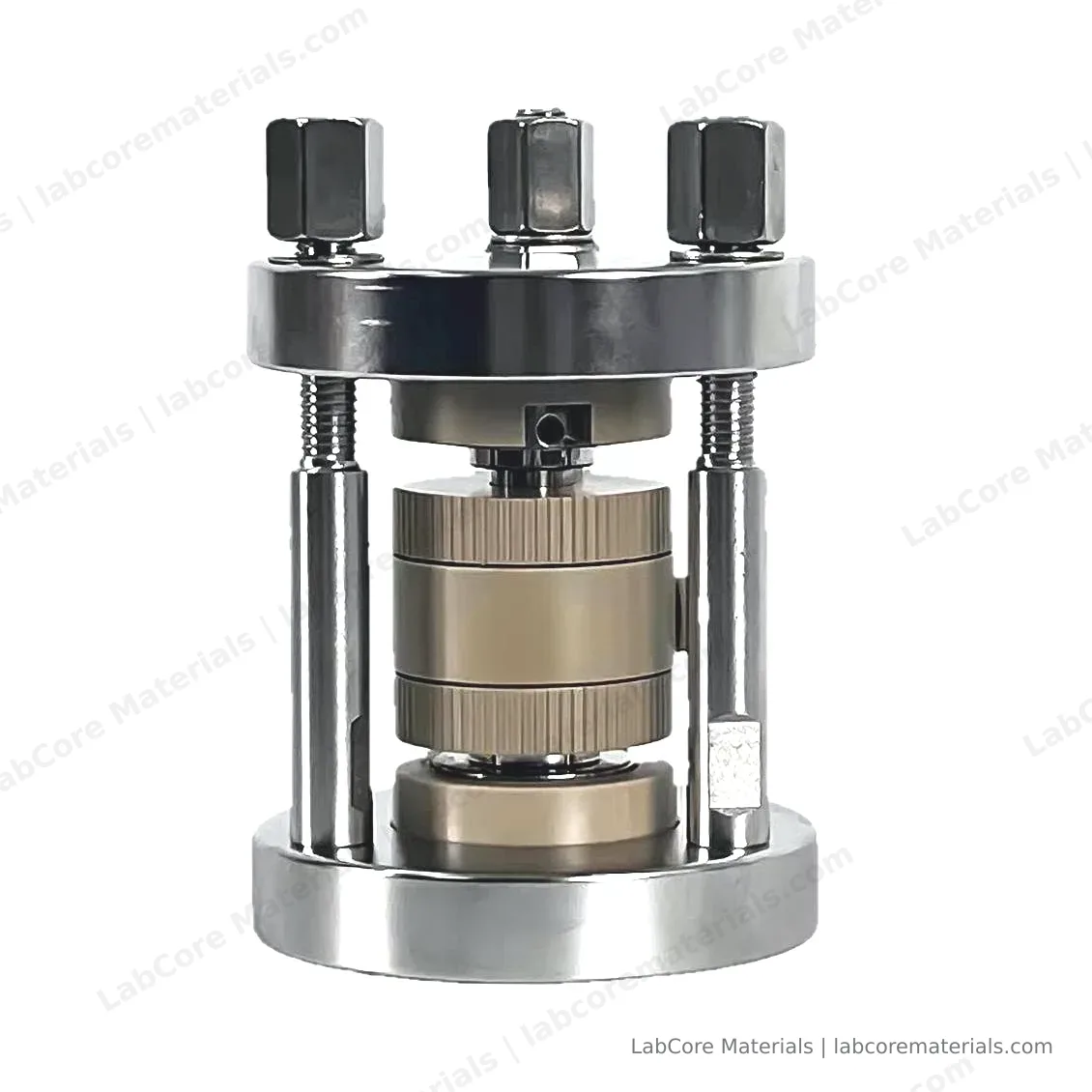
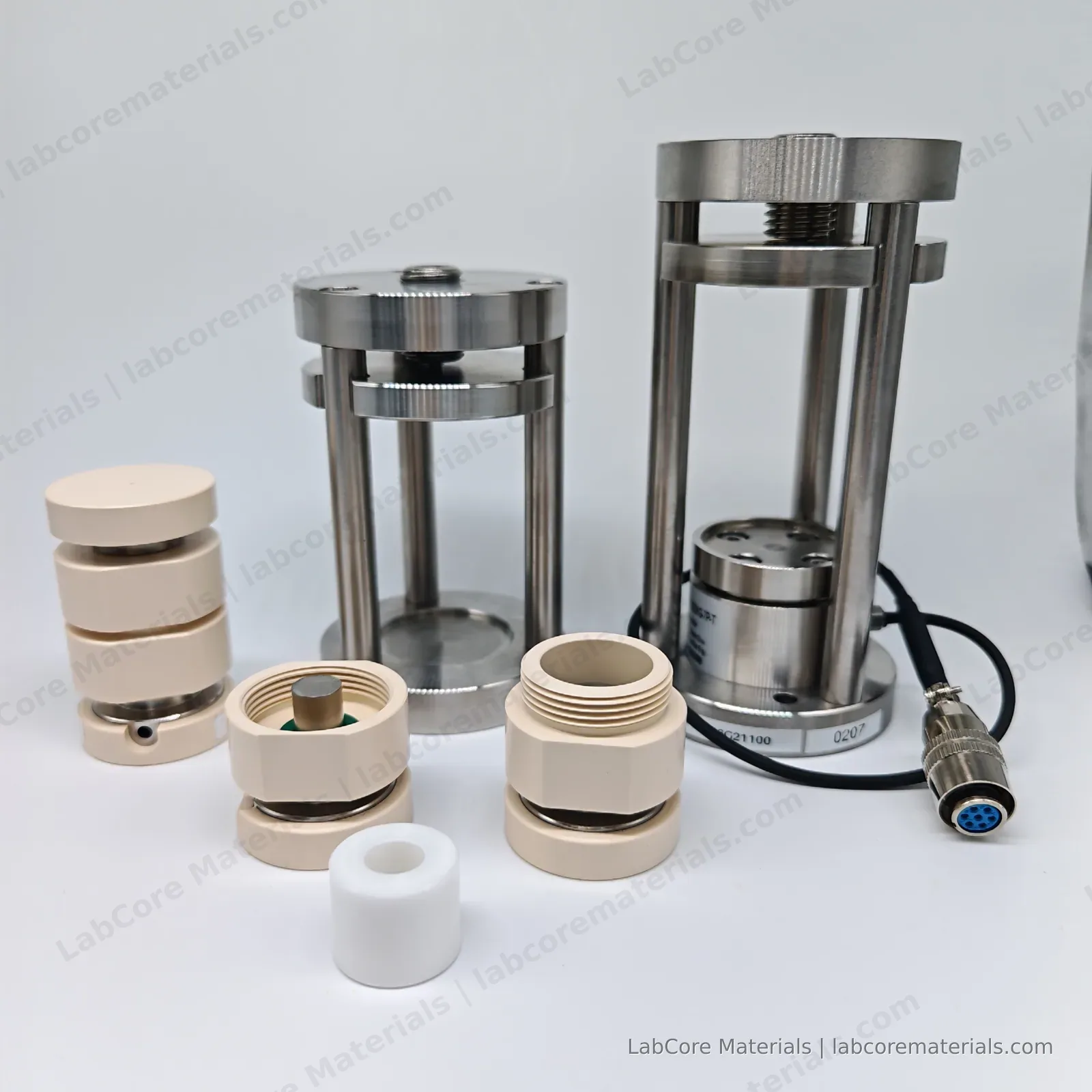
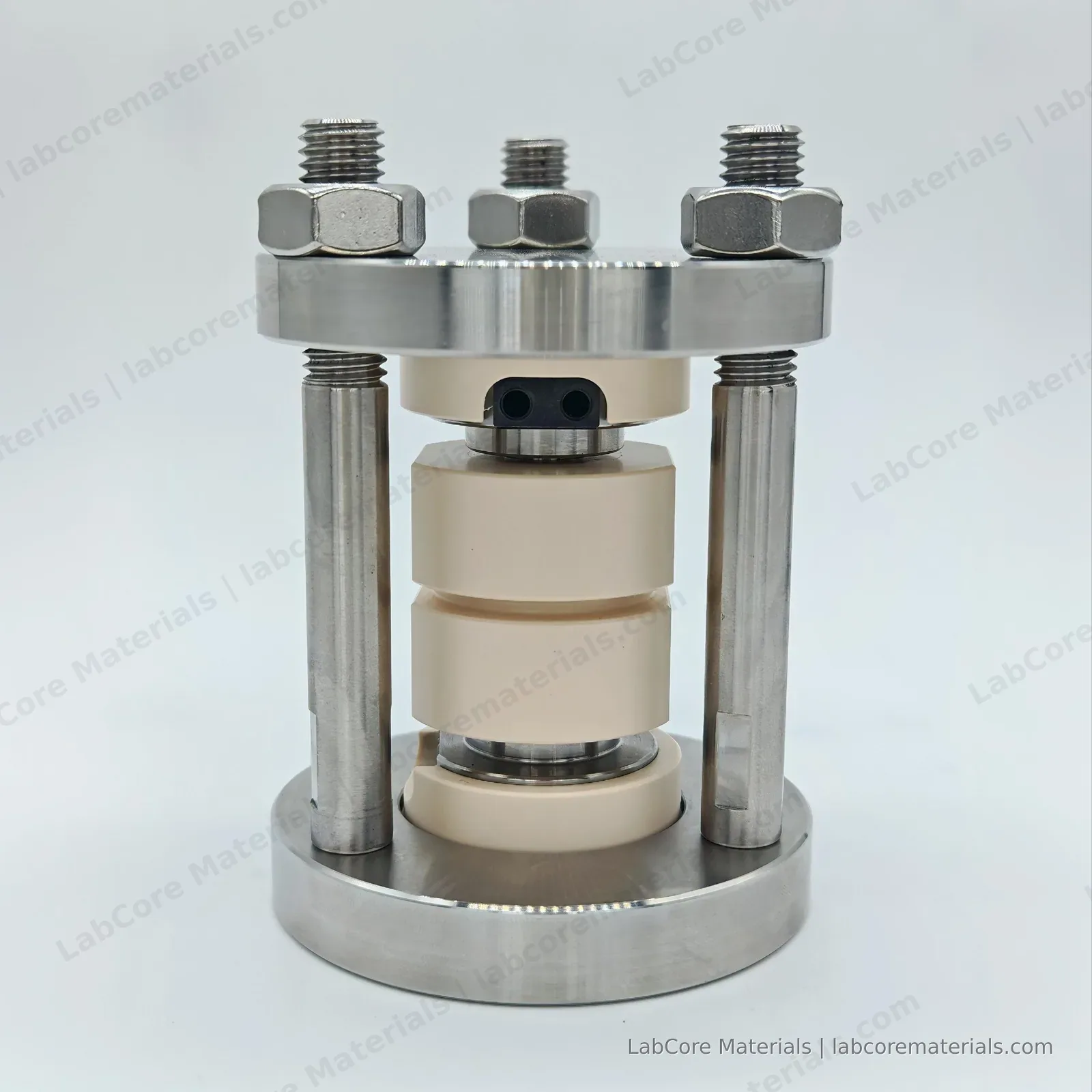
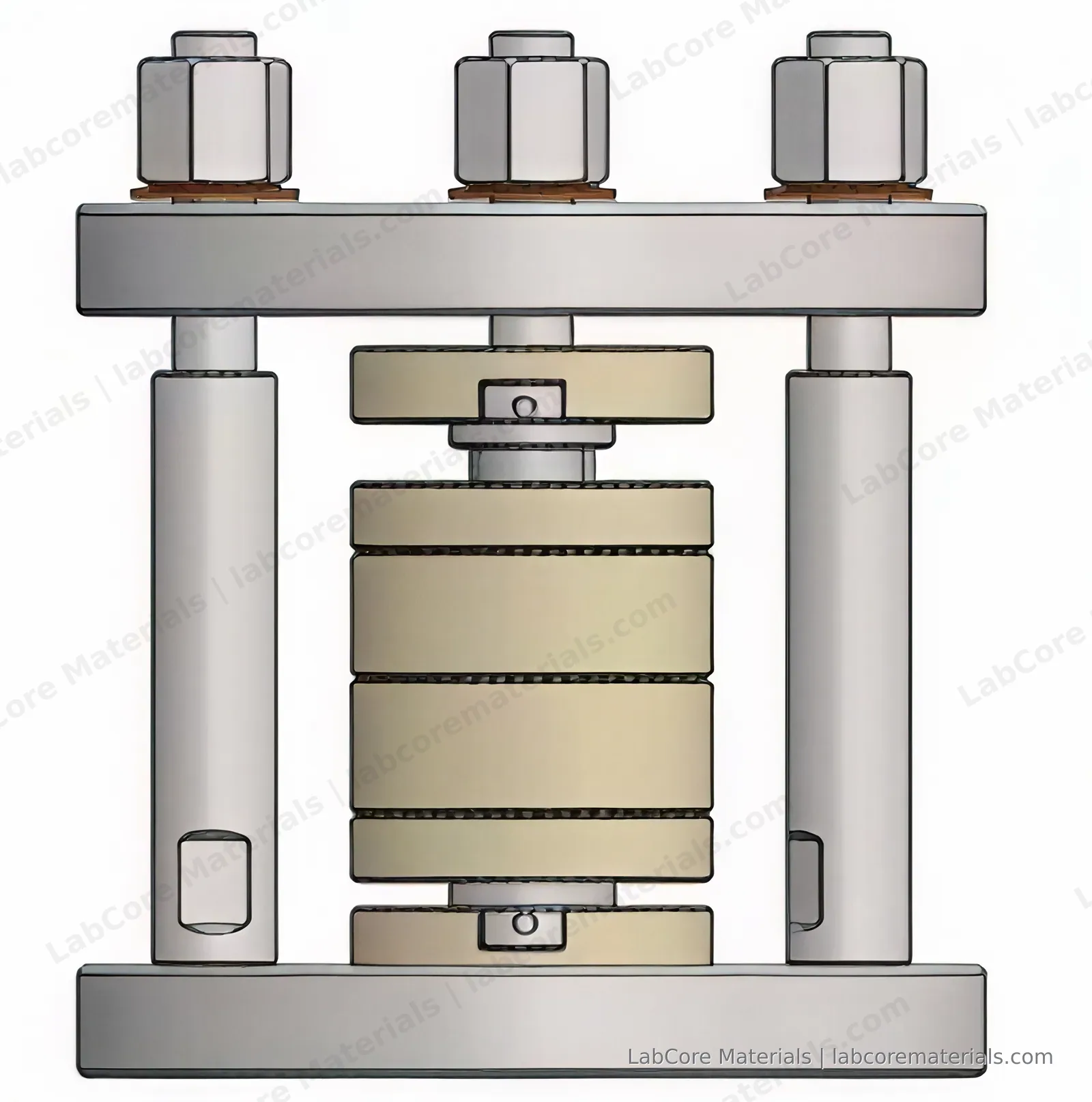
This is a solid-state battery test mold optimized for high-frequency sample changes. Building on the proven compact PEEK-core design, this version adds an upper locking ring that enables fast, even pressure release after testing — making disassembly far more controllable and significantly reducing the risk of damage to the PEEK core, plungers, and samples during repeated handling.
The PEEK inner core delivers excellent electrical insulation, chemical resistance, and mechanical stability up to 200 °C, while die-steel plungers, locking ring, liner, and sealing ring maintain reliable operation at 4 T of stack pressure. The standard configuration supports up to 500 MPa; a 1000 MPa version is available as a custom option on request.
With an overall footprint of φ70 mm × H93 mm and a φ10 mm working cavity (customizable from 5–20 mm), the split-cell design enables quick assembly, disassembly, and electrode replacement — ideal for routine operation inside a glovebox.
Order / Quote
| Model | Pack | Price | Action |
|---|---|---|---|
| DLK-MOL1B100AShips from ShenzhenShips in 2–5 business days | Solid-State Battery Locking-Ring Mold, Standard, 1 pc | $479.00Reference price · volume pricing on request |
Specifications
| Parameter | Value | Unit |
|---|---|---|
| Material (Core) | PEEK | |
| Plunger Material | Die Steel | |
| Outer Dimensions | φ70 × H93 | mm |
| Working Cavity Diameter | 10 | mm |
| Max Stack Force | 4 | T |
| Max Pressure | 500 | MPa |
| Max Operating Temperature | 200 | °C |
| Max. lead-screw head diameter | 36 | mm |
| Electrode Configuration | Working / Counter | Working / Counter |
| Special Feature | Upper locking ring, quick release | Upper locking ring, quick release |
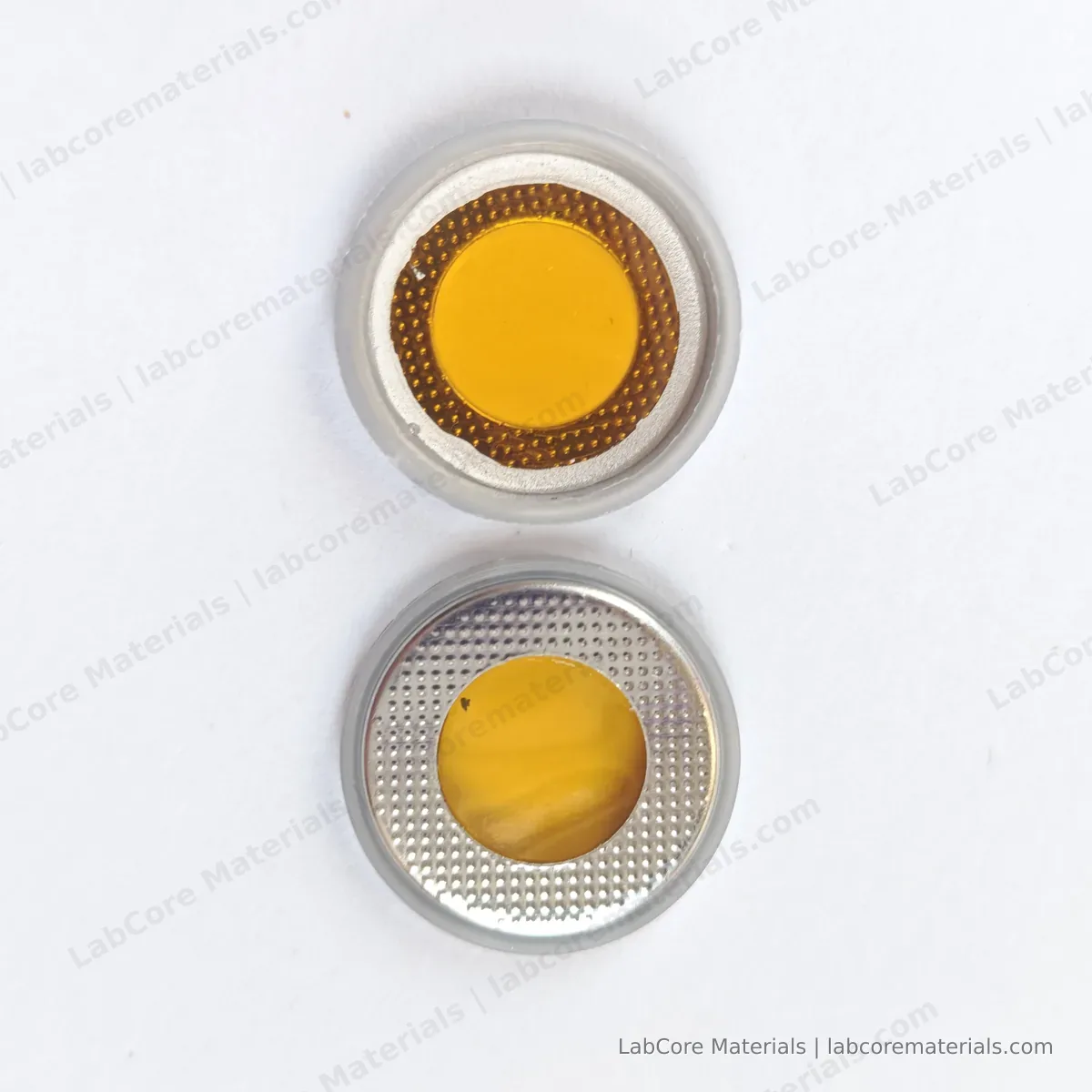
Typical applications: all-solid-state battery assembly & testing, lithium-metal anode interface research, sulfide/oxide/polymer electrolyte evaluation, high-throughput sample screening, in-situ EIS, and long-term cycling.
Setup & Troubleshooting
- Reproducibility of Solid-State Cell Data: Lessons from a 21-Laboratory Round RobinA 2024 round-robin study distributed identical solid-state battery materials to 21 research groups under a single electrochemical protocol while leaving cell assembly unstandardized. The performance spread was substantial, and most of it traced to assembly variables that are rarely reported. This article summarizes the study design, the dominant sources of variability, the open-circuit-voltage quality indicator, and a minimum reporting checklist.
- Stack Pressure in Solid-State Batteries: Forming Pressure vs. Test Pressure, and How to Report BothTwo pressures run every solid-state cell experiment: the forming pressure applied by the sealed mold during compaction, and the test pressure held by an external fixture during cycling. This article separates the two, lists typical powder, film and cell values for sulfide, oxide and polymer systems, converts press tonnage into MPa, and gives the minimum fields to report.
- From Pellet Pressing to Mold Release: A Working Workflow for the Locking-Ring Solid-State Battery Test MoldWhy solid-state test fixtures are harder to live with than liquid cells — interface contact, pressure recording, glovebox handling — and how a locking-ring release design changes the daily workflow from pellet pressing to disassembly.
Research Context
- Interface Problems in Sulfide Solid ElectrolytesSulfide solid electrolytes lead every other class in room-temperature ionic conductivity, yet most sulfide-based cells fail at an interface rather than in the bulk. This article walks through the four interfaces where problems concentrate — cathode side, anode side, air and moisture exposure, and solid-solid contact — with the mechanisms, the established countermeasures, and the laboratory practices behind them, so that measurements stay reproducible and comparable across laboratories.
- 2026 Breakthrough: 2.5nm Coating Thickness — The Minimum Barrier to Long-Life Sulfide Solid-State BatteriesHanyang University researchers identified 2.5nm as the minimum effective coating thickness for sulfide solid-state batteries, while Nature Communications reports breakthrough in Li/Li₆PS₅Cl interface stabilization. How three-electrode testing validates these coating strategies.
Product Images
Shipping & Compliance
- Non-Amazon orders ship from our Shenzhen facility via DHL / FedEx — typically 5–10 business days in transit to the US and EU, with tracking. Bulk orders may go by air freight.