LabCore Materials
Solid-State Battery Three-Electrode Test Mold | Compact
Three-electrode split cell with an integrated reference electrode for independent potential monitoring — purpose-built for all-solid-state battery mechanism and interface diagnostics.
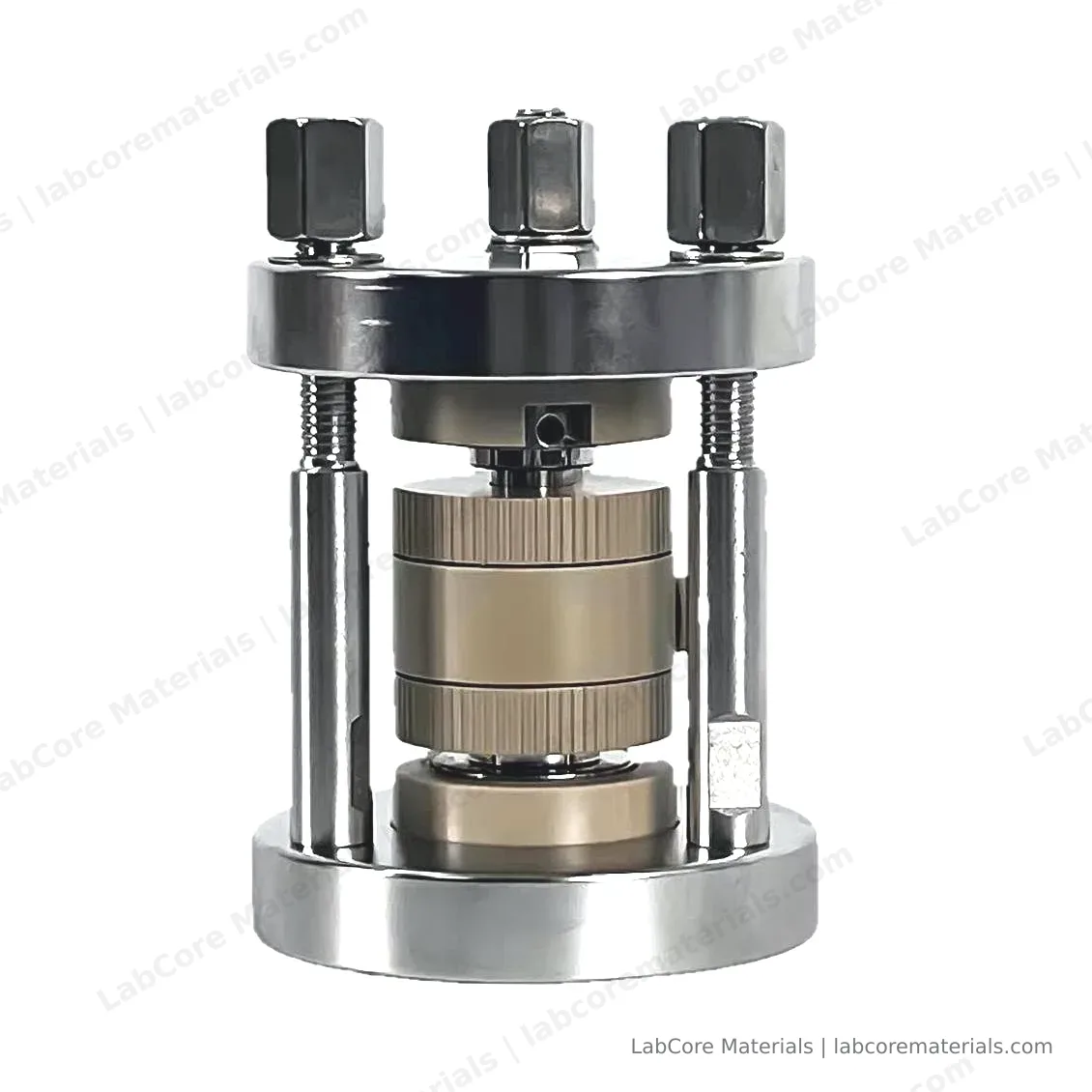
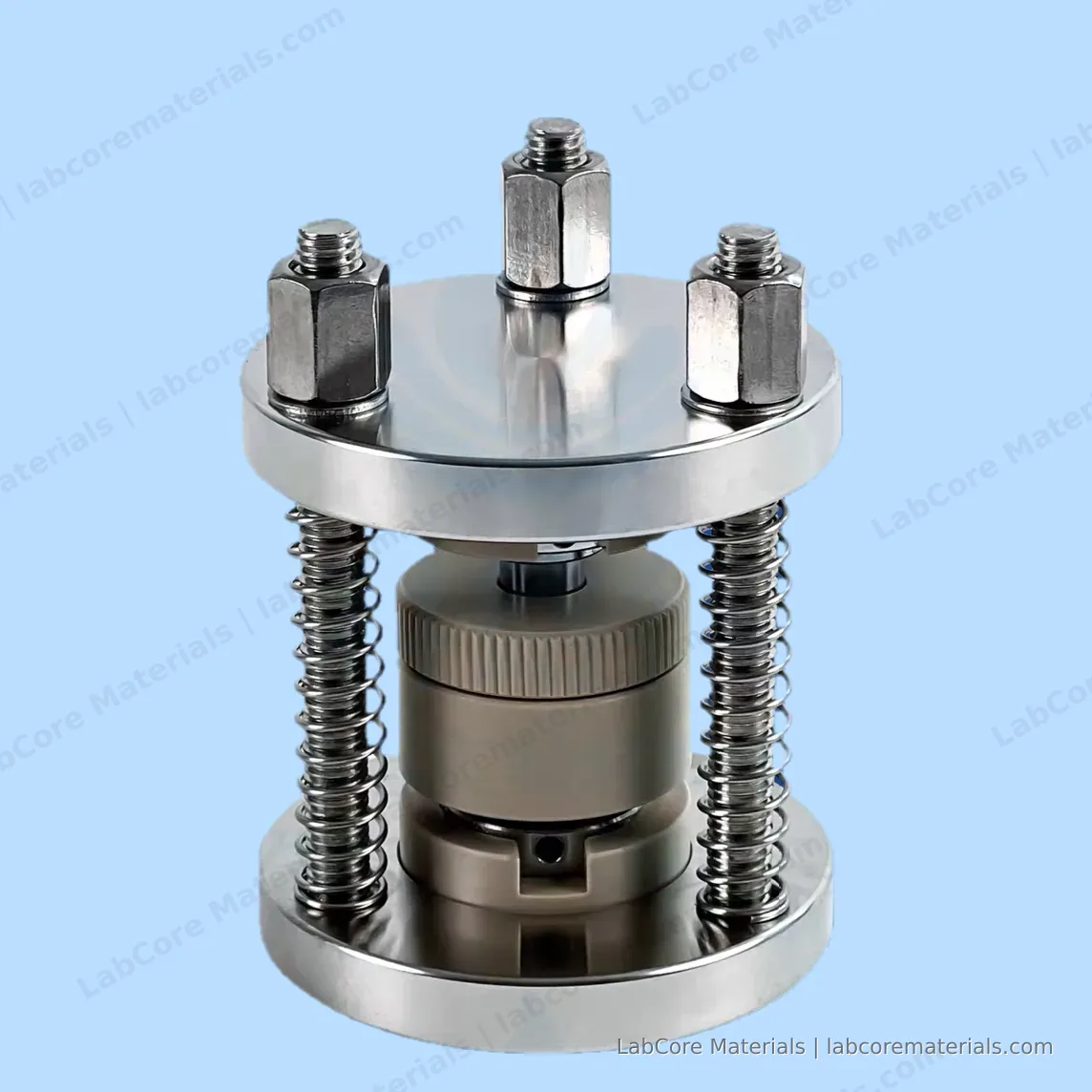
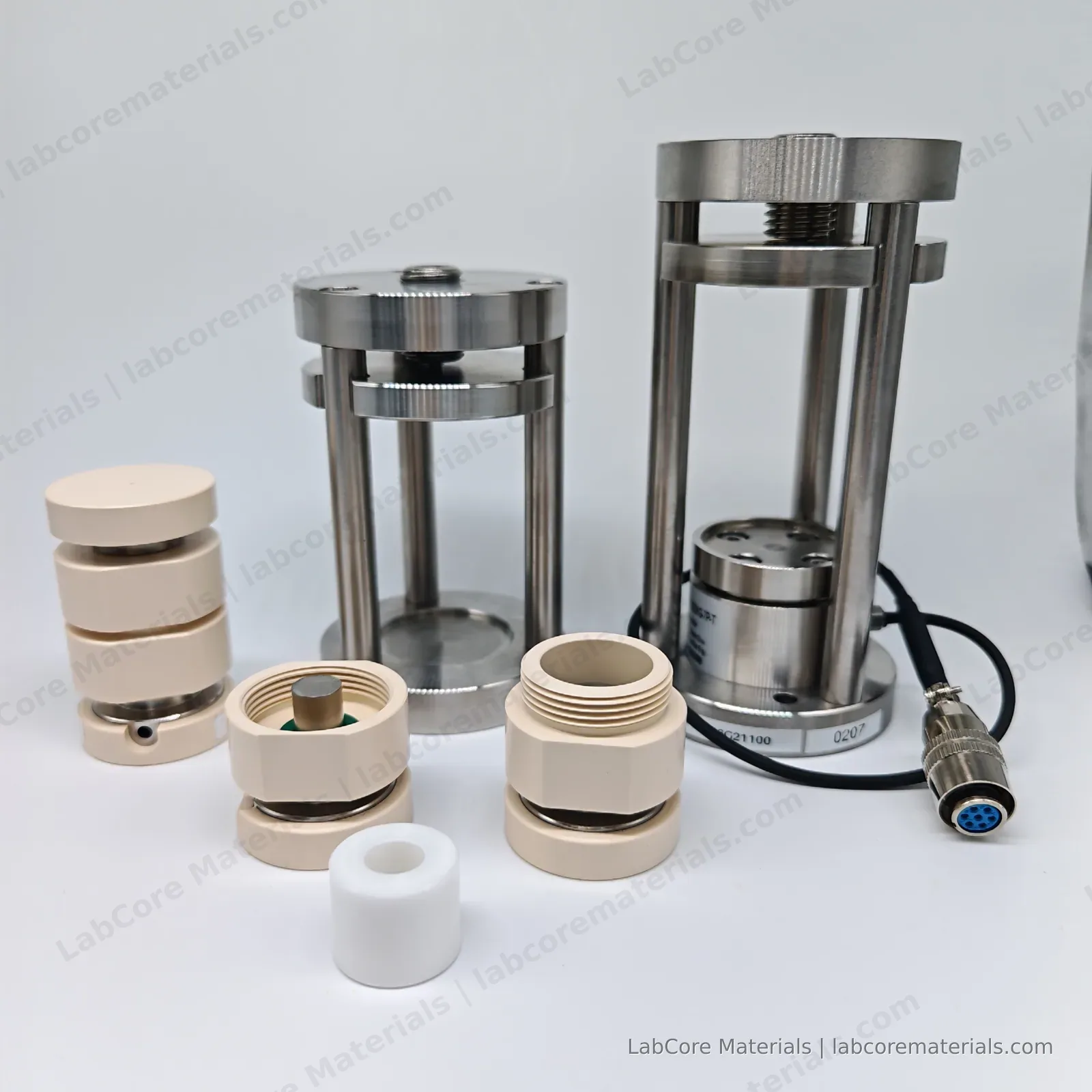
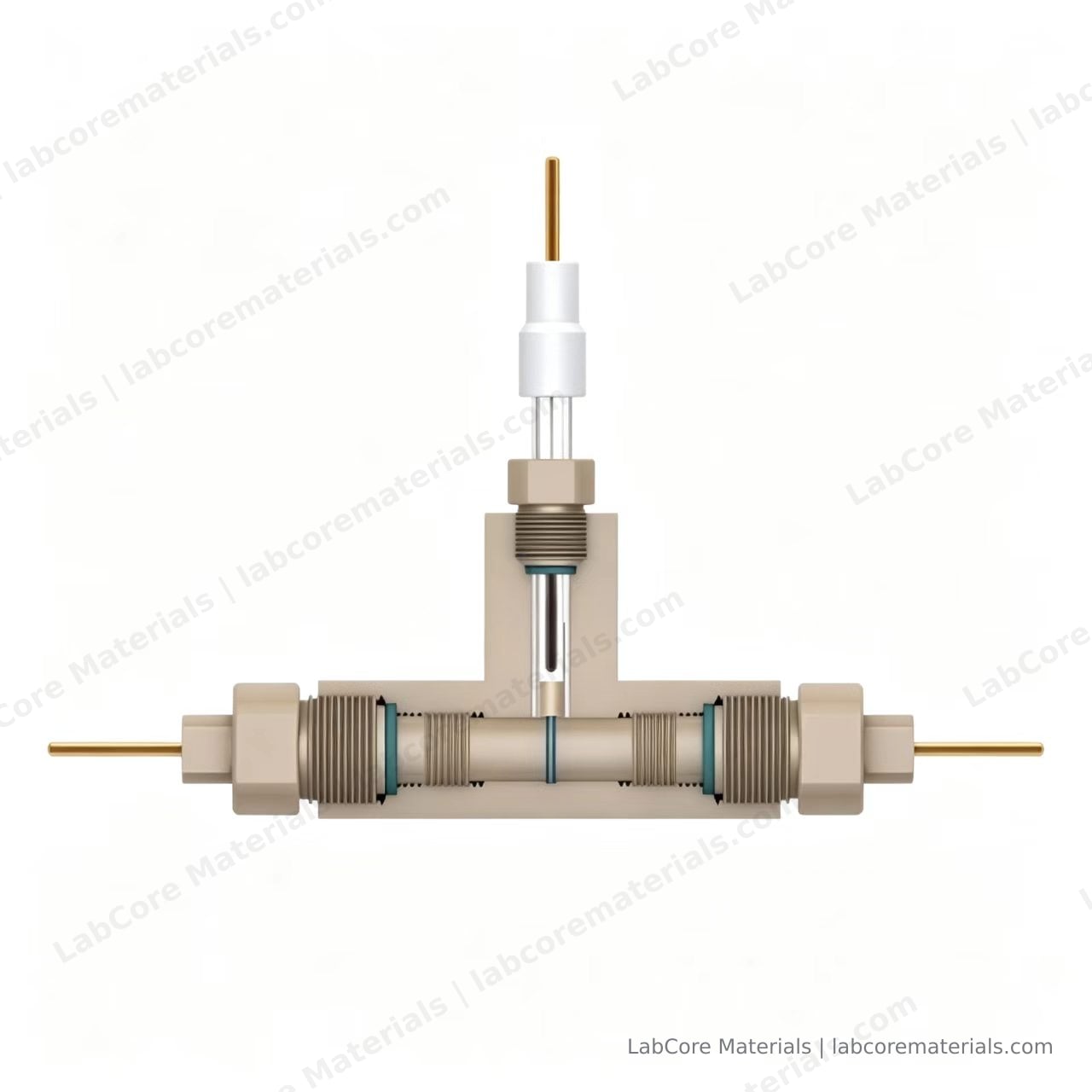
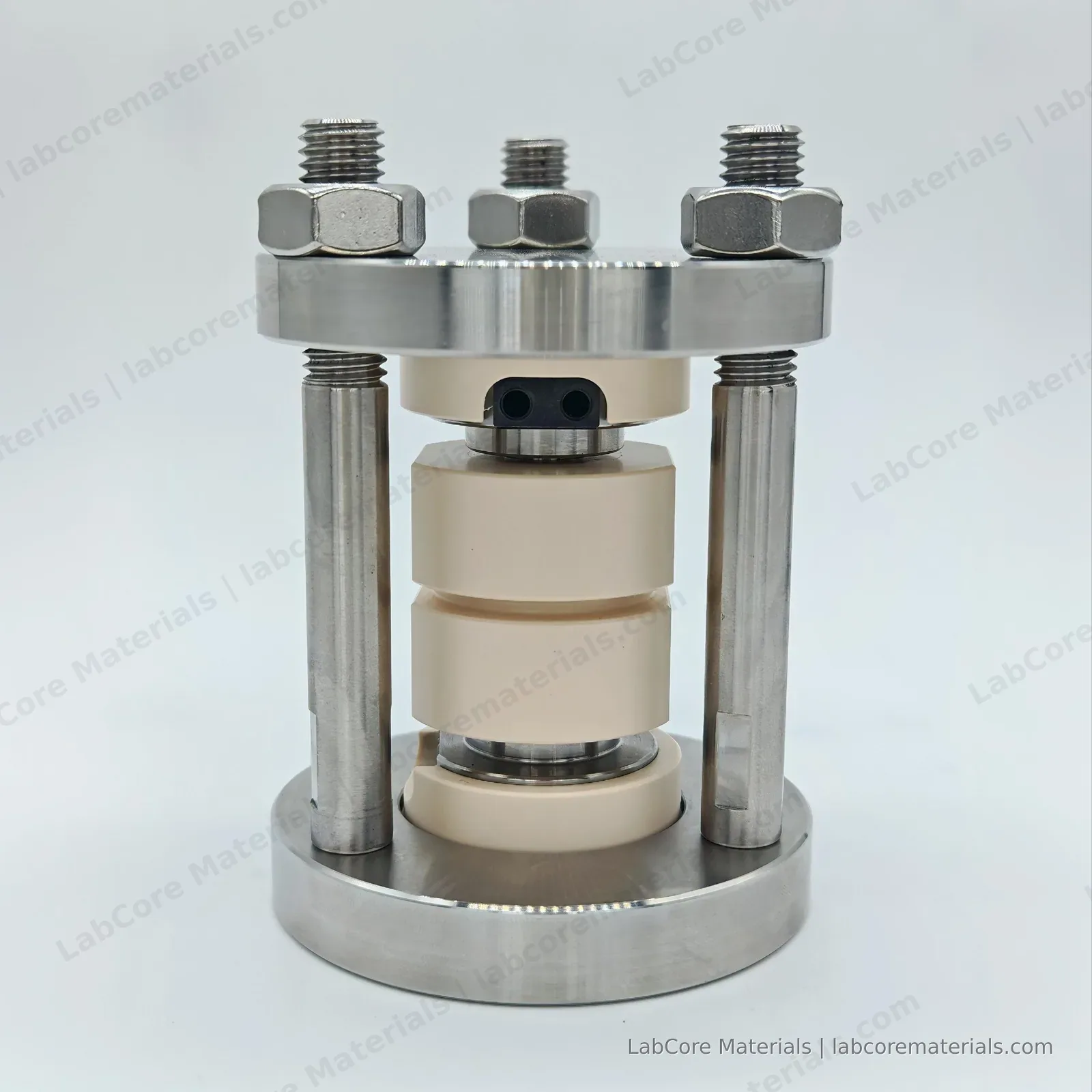
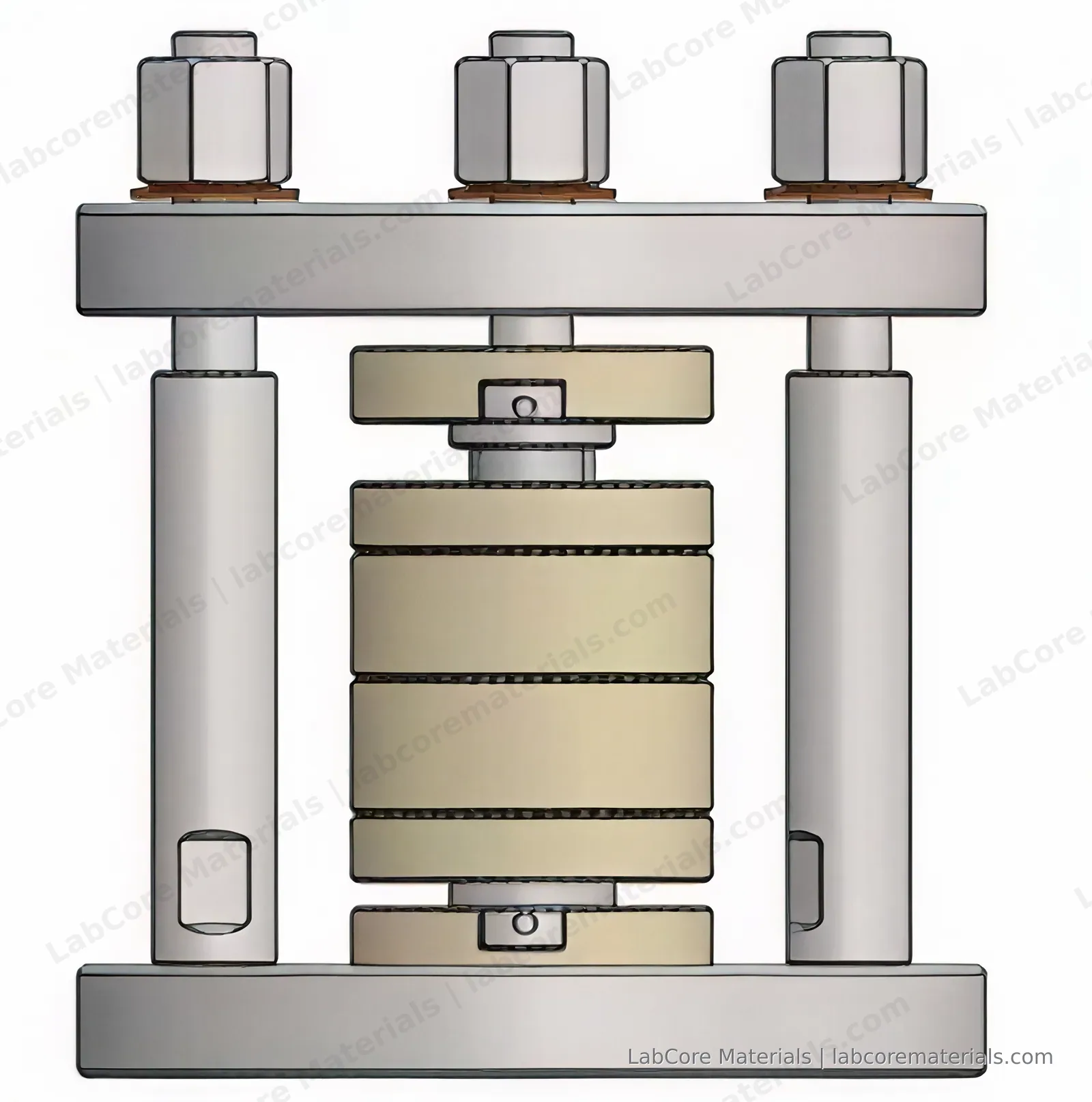
This is a compact three-electrode test cell purpose-built for all-solid-state battery mechanism studies. Unlike conventional two-electrode split cells, the MOL1D100A integrates a third reference electrode, enabling researchers to independently monitor working-electrode and counter-electrode potentials during cycling — critical for deconvoluting interfacial side reactions, impedance evolution, and failure mechanisms.
The PEEK inner core delivers excellent electrical insulation, chemical resistance, and mechanical stability up to 200 °C, while die-steel plungers and the locking cap maintain reliable solid–solid contact at 5 T of stack pressure. The standard configuration supports up to 500 MPa; a 1000 MPa version is available as a custom option on request.
With an overall footprint of φ78 mm × H105 mm and a φ10 mm working cavity (customizable from 5–20 mm), the split-cell design enables quick assembly, disassembly, and electrode replacement — ideal for routine operation inside a glovebox.
Order / Quote
| Model | Pack | Price | Action |
|---|---|---|---|
| DLK-TB-500-MPAShips from ShenzhenShips in 2–5 business days | 500 MPa | $799.00Reference price · volume pricing on request |
Specifications
| Parameter | Value | Unit |
|---|---|---|
| Material (Core) | PEEK | |
| Plunger Material | Die Steel | |
| Outer Dimensions | φ78 × H105 | mm |
| Working Cavity Diameter | 10 | mm |
| Max Stack Force | 5 | T |
| Max Pressure | 500 | MPa |
| Max Operating Temperature | 200 | °C |
| Screw Head Diameter | 36 | mm |
| Electrode Configuration | Working / Counter / Reference |
All-solid-state battery assembly & testing, lithium-metal anode interface research, sulfide/oxide/polymer electrolyte evaluation, in-situ EIS, and long-term cycling.
When to Use / Not Use
Suits: three-electrode measurements on pellet-type solid-state cells — independent reference-electrode potential monitoring, and CV / EIS deconvolution of working vs counter electrode contributions.
Does not suit: pouch or cylindrical cell formats. This is a lab-scale split cell for pressed pellets, not a sealed cell assembly platform.
What Else You Need
- 10 mm diameter separator discs or solid-electrolyte pellets for the working cavity
- Press capable of ≥ 5 T stack pressure (manual or hydraulic)
- Glovebox or dry room — the split-cell design is built for routine assembly and electrode exchange in inert atmosphere
- Custom cavity diameters (5–20 mm) available on request
Setup & Troubleshooting
- From Pellet Pressing to Mold Release: A Working Workflow for the Locking-Ring Solid-State Battery Test MoldWhy solid-state test fixtures are harder to live with than liquid cells — interface contact, pressure recording, glovebox handling — and how a locking-ring release design changes the daily workflow from pellet pressing to disassembly.
- Three-Electrode System Design for Solid-State Battery ResearchComplete guide to three-electrode cell design for solid-state batteries: why reference electrodes matter, CV/EIS parameter selection, data interpretation, and common pitfalls in reference electrode placement and Li-metal stability.
- Solid-State Battery Assembly Troubleshooting (Part 2): Common Assembly FailuresReal-time solid-state battery assembly troubleshooting for 5 common failures: electrolyte cracking, poor electrode contact, material spillage, uneven pressure distribution. Complete solid-state battery assembly guide.
Research Context
- Interface Problems in Sulfide Solid ElectrolytesSulfide solid electrolytes lead every other class in room-temperature ionic conductivity, yet most sulfide-based cells fail at an interface rather than in the bulk. This article walks through the four interfaces where problems concentrate — cathode side, anode side, air and moisture exposure, and solid-solid contact — with the mechanisms, the established countermeasures, and the laboratory practices behind them, so that measurements stay reproducible and comparable across laboratories.
- Why Cracks Run Faster Than Lithium: Operando XCT Reveals the Real Dendrite Formation MechanismNature Materials 2021: Operando synchrotron XCT reveals that in solid-state batteries, cracks propagate through the electrolyte first, then lithium gradually fills the channel from behind—rewriting our understanding of lithium dendrite formation.
- 2026 Breakthrough: 2.5nm Coating Thickness — The Minimum Barrier to Long-Life Sulfide Solid-State BatteriesHanyang University researchers identified 2.5nm as the minimum effective coating thickness for sulfide solid-state batteries, while Nature Communications reports breakthrough in Li/Li₆PS₅Cl interface stabilization. How three-electrode testing validates these coating strategies.
Product Images
Shipping & Compliance
- Non-Amazon orders ship from our Shenzhen facility via DHL / FedEx — typically 5–10 business days in transit to the US and EU, with tracking. Bulk orders may go by air freight.