
A pouch cell carries no rigid can. Cylindrical and prismatic cells rely on steel or aluminum housings for mechanical integrity; in a pouch cell, this function is provided by the laminated aluminum film and its seals, while the laminate itself remains flexible. This gives every packaging component a dual role: it is simultaneously a functional material and a structural part. Prototype-stage failures usually begin in the packaging materials rather than in the electrode chemistry.
Three key points
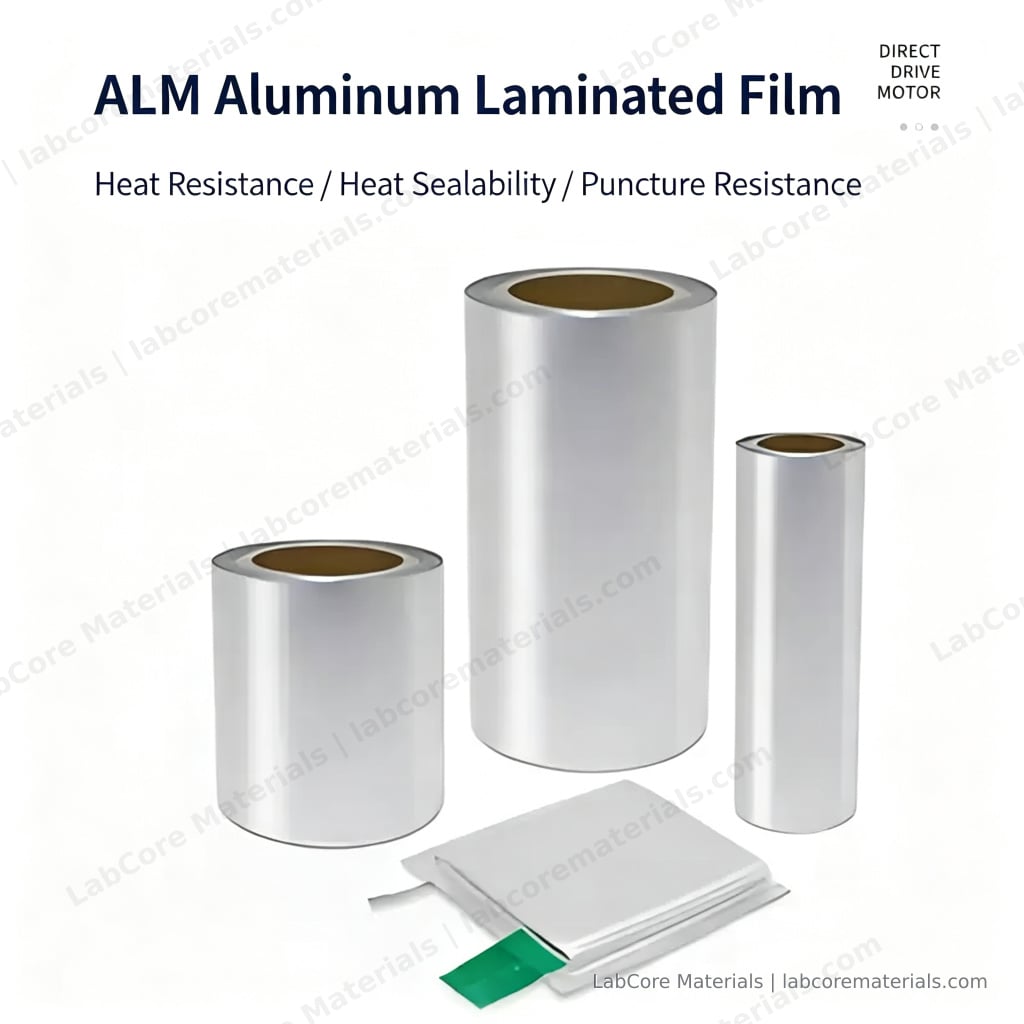
- The three layers of aluminum laminated film (ONY / Al foil / CPP) each serve a distinct function; thickness selection is a compromise among formability, moisture barrier and rigidity.
- Tabs are matched pairs — aluminum for the cathode, nickel for the anode — and the insulation zone must sit within the seal width, or the tab area becomes the corrosion site.
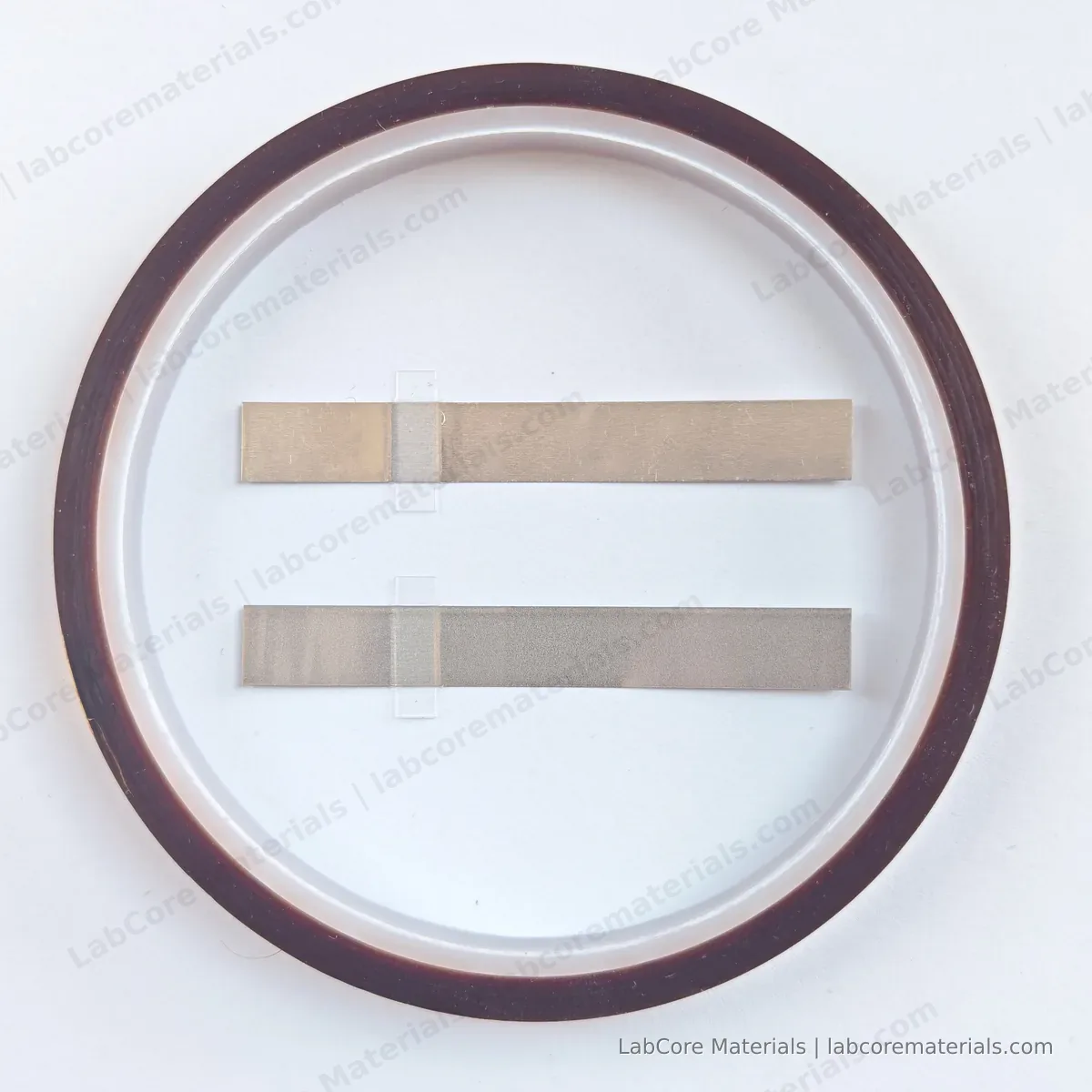
- Prototype pouch failures concentrate in three interfaces: seal strength decay, formation gassing, and reversible swelling that turns into mechanical stress.
Key parameters of the two film products in our range
| Parameter | Laminated film, sheet format | Laminated film, roll format |
|---|---|---|
| Total thickness | 113 μm | 76–153 μm (grade-dependent) |
| Structure | ONY / Al foil / CPP, 3-layer | Battery-grade 3-layer laminate |
| Outer ONY layer | 25 μm | — |
| Al foil | 40 μm | — |
| Sheet size | 200 × 100 mm | Roll, cut to length |
| Typical use | Small prototype cells, one-off builds | Pilot lines, repeatable deep-draw formats |
Format comparison and ordering: sheet-format laminated film | roll-format laminated film
The materials list
A complete pouch build needs the following, grouped by function:
- Electrochemistry: cathode sheets or coating stock, anode sheets, separator, electrolyte. These follow the same selection logic as any lithium-ion build; the pouch-specific constraints come from the packaging side.
- Packaging: aluminum laminated film, formed (deep-drawn) pockets or flat-pouch format.
- Current collection: matched tab pairs — aluminum for the cathode, nickel (or aluminum, in some designs) for the anode.
- Sealing and insulation: sealing tape for the tab area, polyimide or PET insulation zones, and a controlled sealing process with defined temperature, pressure and dwell time.
What follows covers the pouch-specific items: the film, the tabs, and the three interfaces where prototypes most often fail.
Aluminum laminated film: layer structure and layer functions
The standard film is a three-layer laminate. The outer ONY (nylon) layer provides abrasion resistance and maintains dimensional stability during handling and forming. The middle aluminum foil is the primary barrier against water vapor and oxygen, and it largely determines the stiffness of the film. The inner CPP (cast polypropylene) layer is the sealing surface: it melts during heat sealing and fuses to itself, and the seal depends on this layer.
Thickness selection follows from the forming process and the service conditions of the cell. Thin films (around 76–88 μm) allow deeper pockets with tighter radii and lower inactive mass, at the cost of barrier performance and handling robustness. Thick films (up to 153 μm) offer better protection against moisture ingress and mechanical damage but resist forming: deep draws in thick film show wrinkling and stress whitening at the corners. Where the design folds the film, total thickness also sets the minimum bend radius.
The corner radius of the drawn pocket requires separate attention: most film failures in formed pockets start at the corners, where the laminate is stretched biaxially. Two measures follow: generous radii in the forming die, and films rated for the specified draw depth.
Tabs: matched pairs and the insulation zone
Tabs are structurally simple but account for a disproportionate share of prototype failures. Three requirements apply:
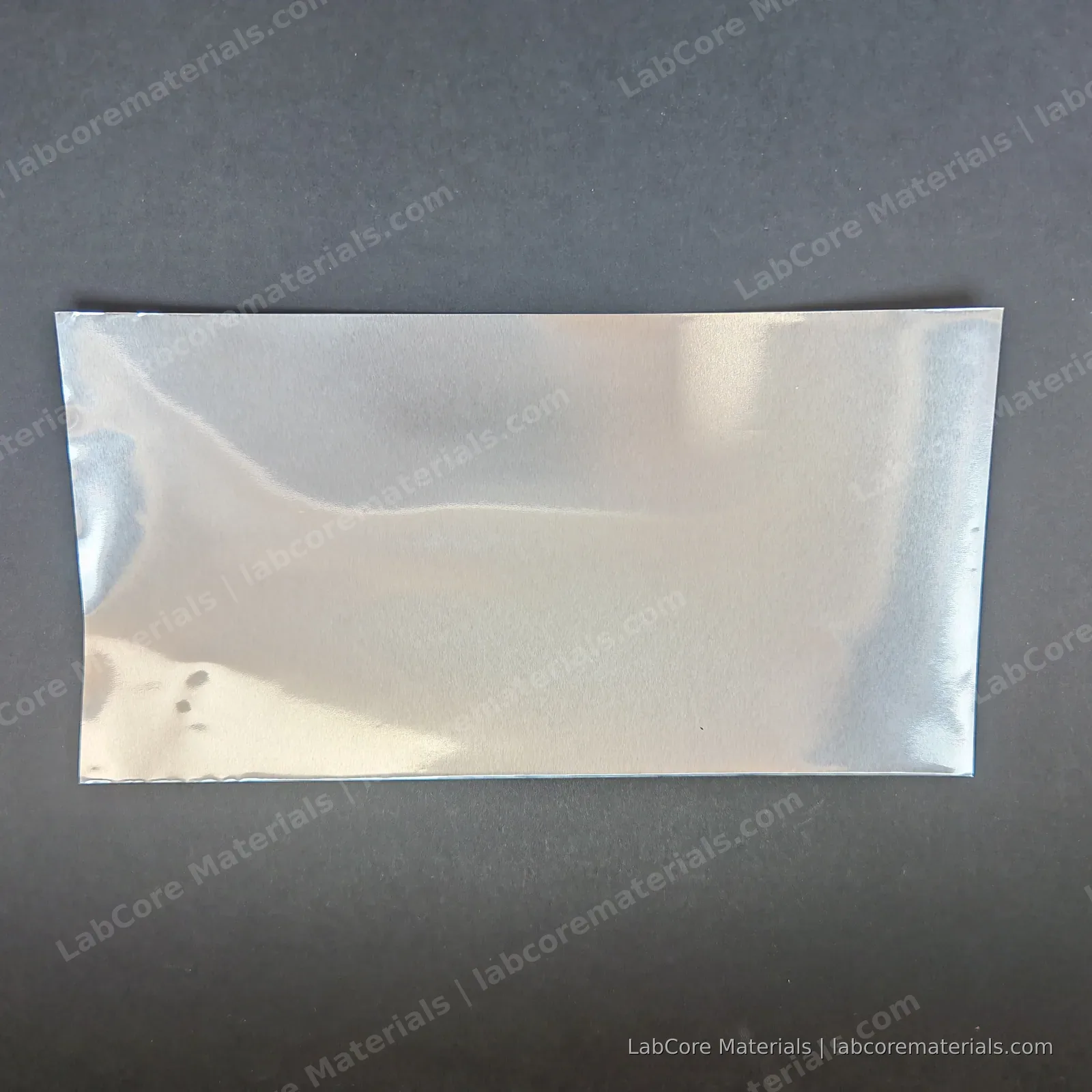
- Material pairing. The cathode tab is aluminum; the anode tab is nickel (or plated copper in higher-power designs). An incorrect pairing reverses the galvanic relationship at the seal, and the tab corrodes from the inside.
- Width against current. Tab width sets the current-carrying cross-section. For laboratory cells in the 100–500 mAh class, 5 mm tabs are common; 8 mm suits higher capacity or fast-charge prototypes.
- Insulation zone alignment. The polyimide tape on the tab must sit within the seal width. If the conductive part of the tab extends into the seal area, the CPP layer cannot fuse cleanly, and that location becomes a leak path. For this reason tabs and sealing tape are supplied as matched pairs, with the tape width matched to the tab.
Where prototype pouches fail
Seal strength decays. Seal strength is not constant over life. Zhang et al. (Engineering Failure Analysis, 2021) tested sealing strength in situ during cycling and modeled its deterioration: mechanical stress from swelling, thermal cycling and electrolyte exposure all reduce seal strength over life, and the decline is measurable well before the cell leaks. A seal margin designed only for the initial state is underspecified.
Formation generates gas. Stock et al. (J. Electrochem. Soc., 2023) followed gassing and swelling operando during formation with pressure measurement inside the pouch: gas evolution tracks the formation protocol step by step, and the swelling is partly reversible but leaves the laminate under residual stress. A formation protocol that ignores the gas volume is equivalent to assuming that the packaging carries no such mechanical load.
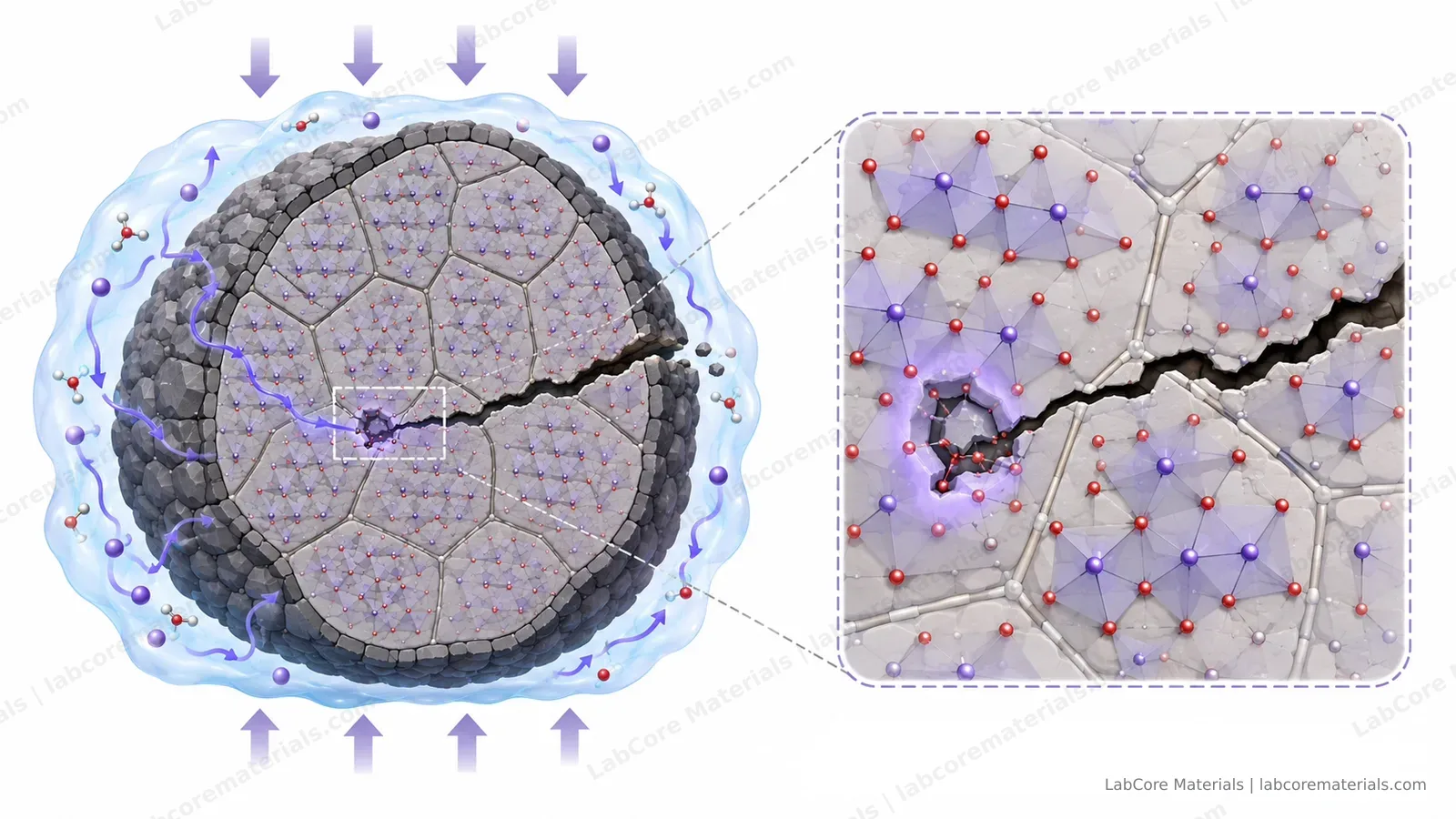
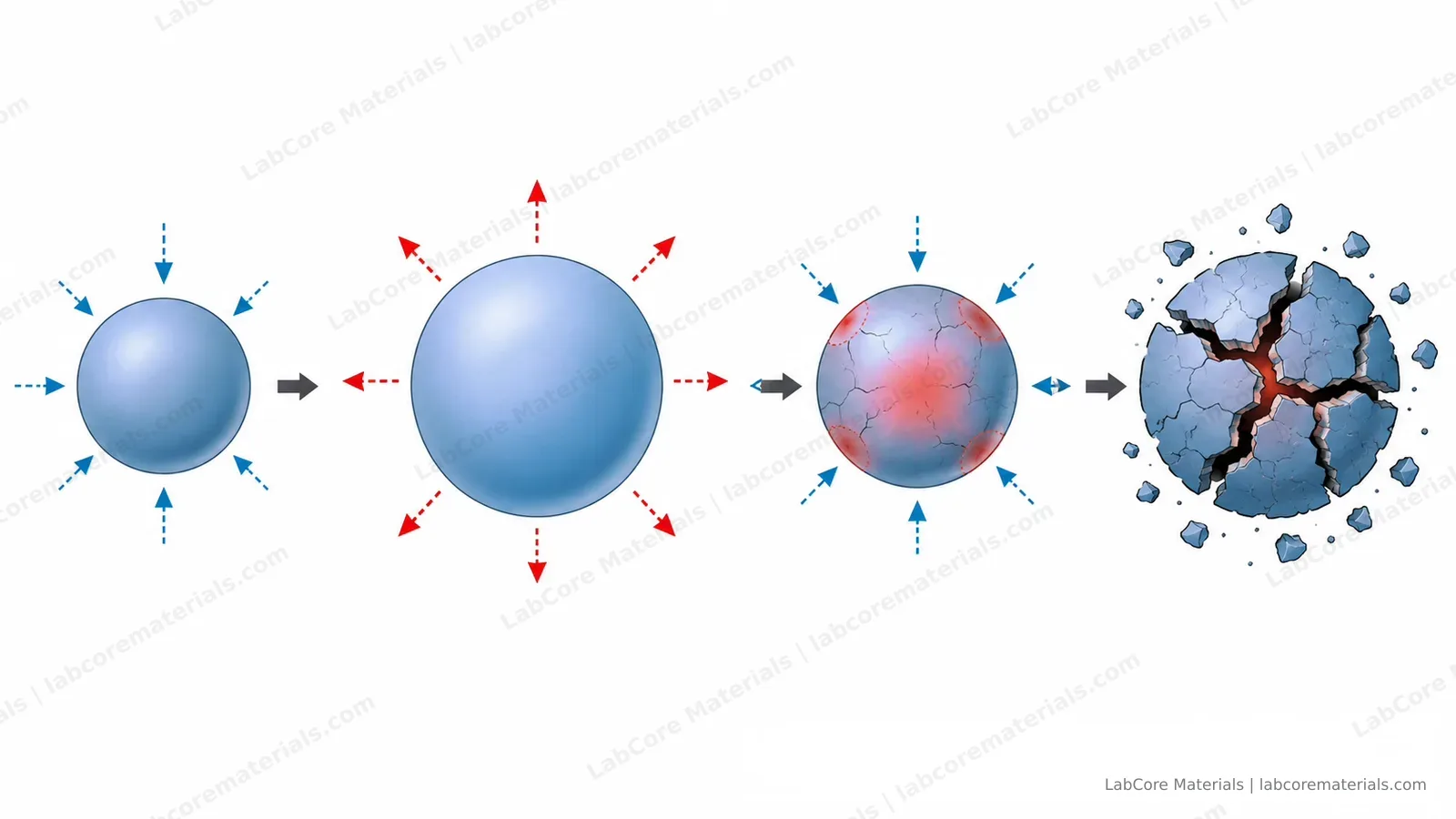
Residual stress also accumulates inside the electrode materials themselves: during formation and cycling, the volume changes of the active material build up stress paths within the particles.
Swelling turns into short-circuit risk. Höschele and Ellersdorfer (Batteries, 2023) implemented reversible swelling in a numerical pouch model and used it to predict where local stress concentrates enough to threaten the separator. The pattern is consistent with teardown observations: stress concentrates at the pocket edges and around stiff tabs, not uniformly across the cell.
At the particle scale, the same mechanism appears as volume-change-induced stress cracking: expansion generates stress, and cracks nucleate where the stress concentrates.
For cells operated near the lithium-plating boundary, the packaging also affects how the failure is observed: Dutoit et al. (Chemistry of Materials, 2025) detected metallic lithium growth in large aluminum-laminated pouch cells by in-situ L-band EPR. This result indicates that laminate selection must consider measurement compatibility as well as barrier properties.
Selection and process checklist
- Film: total thickness against draw depth; corner radius against forming die; CPP layer undamaged on the sealing face.
- Tabs: material pairing correct; width against target current; insulation tape inside the seal width; supplied as matched pairs with tape.
- Sealing: temperature, pressure and dwell time recorded per batch; first article of every batch checked by vacuum leak test before formation.
- Formation: gas volume expected and either absorbed by fixture pressure or measured; swelling allowance in the fixture, not zero clearance.
Application cases
| Reference | System | What it established |
|---|---|---|
| Zhang W, Wei Y, Cheng M, Liu Y. Engineering Failure Analysis, 2021, 120: 105036. DOI: 10.1016/j.engfailanal.2020.105036 | In-situ testing of pouch cell seals | Sealing strength deteriorates measurably during cycling; a model links stress and environment exposure to the decay |
| Stock S, Diller F, Böhm J, Hille L, et al. J. Electrochem. Soc., 2023, 170: 060539. DOI: 10.1149/1945-7111/acde0f | Operando pressure measurement during formation | Gassing and swelling follow the formation protocol stepwise; part of the swelling is reversible but leaves residual stress |
| Höschele P, Ellersdorfer C. Batteries, 2023, 9: 417. DOI: 10.3390/batteries9080417 | Numerical pouch cell model with reversible swelling | Local stress concentration at pocket edges and tabs predicts short-circuit risk locations |
| Dutoit C, Malas C, Soleti R, Mirbel D, et al. Chemistry of Materials, 2025, 37: 9737–9744. DOI: 10.1021/acs.chemmater.5c01941 | Large aluminum-laminated pouch cells, in-situ L-band EPR | Metallic lithium growth detected operando in pouch format |
Conclusion
The materials list of a pouch cell is short, but the packaging items perform the structural function that metal housings provide in cylindrical and prismatic formats. Selecting the laminated film against draw depth and corner radius, pairing tabs with correctly sized insulation zones, and treating seal strength, formation gassing and swelling as measurable quantities rather than assumptions together determine whether a prototype pouch reaches the cycling stage with its packaging intact. The cited studies provide quantitative baselines for seal-strength deterioration, operando gas evolution and stress-driven failure location, and can serve as reference points for laboratories establishing their own pouch-cell material specifications and acceptance criteria.
For the two packaging components discussed in depth, see our aluminum laminated film guide and battery tab selection guide.
Related Reading
- Battery Separator Selection Guide: Brand, Thickness, High Temperature — separator grades for pouch and coin cells, including how they behave above 60 °C
- Separator Thickness Explained: 20 µm vs 25 µm vs 38 µm — the thickness choice that sets ionic resistance in a pouch build