
LabCore Materials
Single-Point Pressing Solid-State Battery Test Mold
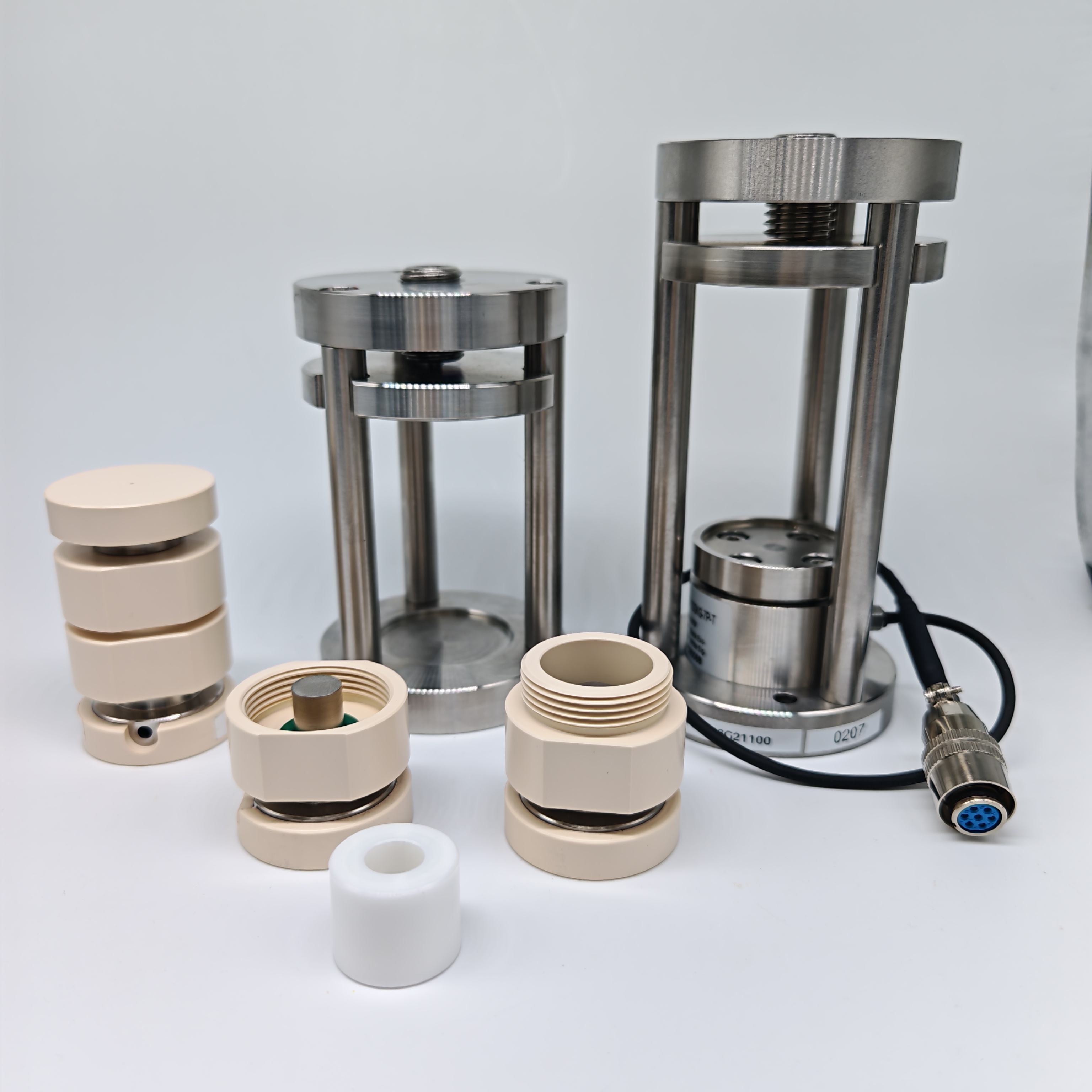
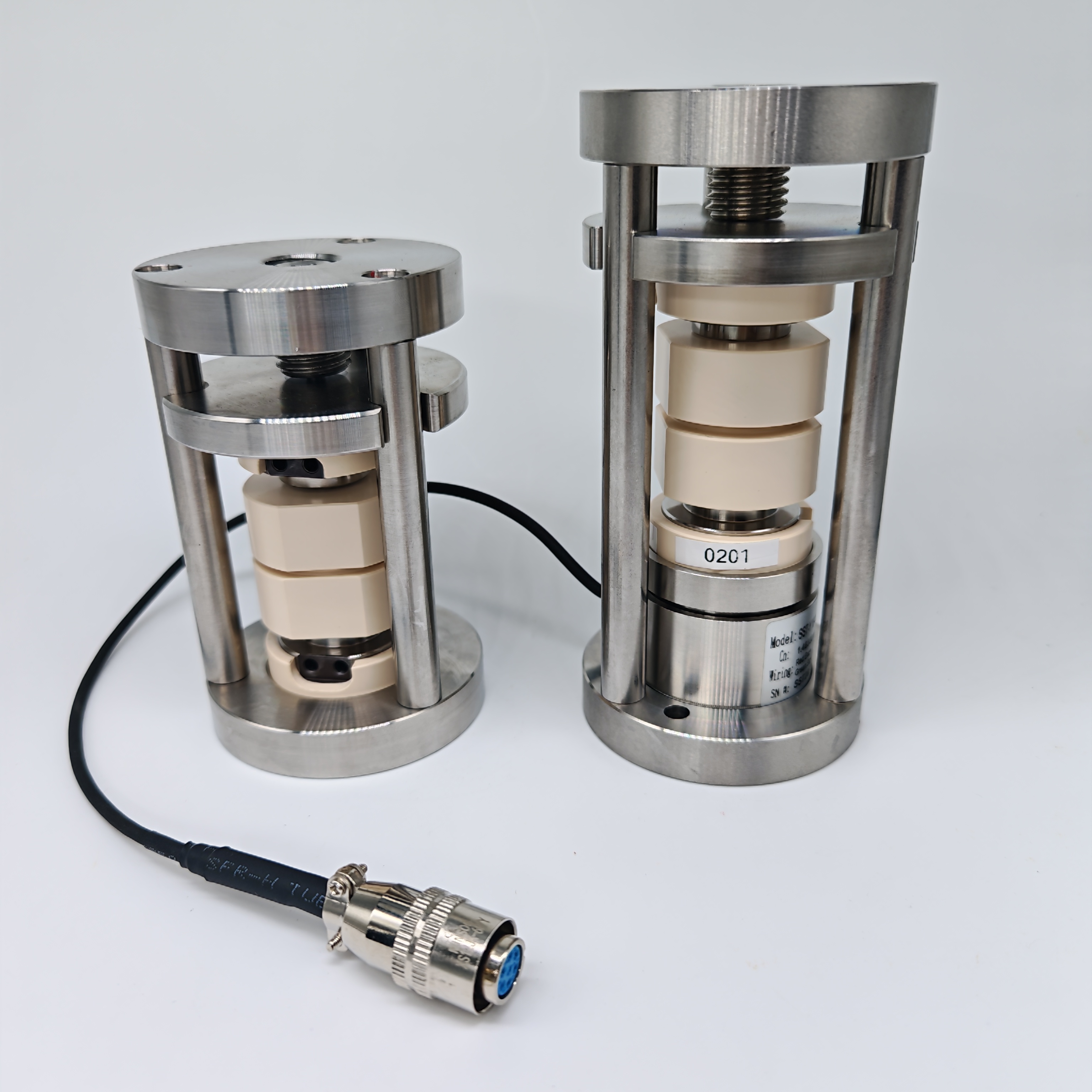
Single-point axial pressing solid-state battery mold with 5 T stack force, φ10 mm cavity, PEEK-ceramic composite, Standard and With-Sensor variants on one page
Order / Quote
| Model | Pack | Price | Action |
|---|---|---|---|
| SS-D-CIn stock | LabCore Single-Point Pressing Solid-State Battery Test Mold, 1 pc | $499.00 | |
| SS-D-YIn stock | Single-Point Pressing Solid-State Battery Test Mold With Pressure Sensor 1pc | $899.00 |
Specifications
| Parameter | Value | Unit |
|---|---|---|
| Material | Ceramic, PEEK, alloy steel | |
| Cavity Diameter | φ10 | mm |
| Mold Body Dimensions | Φ36 × H62 | mm |
| Mold Body Weight | 180 | g |
| Max Stack Force | 5 | T |
| Sealing | 双密封圈/ 雙密封圈/Dual-seal ring structure | |
| Pressure Sensor Range | 500 kg / 1000 kg / 3000 kg / 5000 kg | |
| Max Operating Temperature | 200 | °C |
Product Images
FAQ
What is the maximum pressure this mold can handle?
The standard version supports up to 500 MPa (5 T stack force on a φ10 mm cavity). For higher-pressure applications, we offer a 1000 MPa custom version, ideal for dense oxide solid electrolytes.
What's the difference between the Standard and With-Sensor variants?
The Standard variant is mechanical-only: you apply pressure with a hydraulic press, lock it in place, and remove the mold. The With-Sensor variant adds real-time pressure monitoring (500/1000/3000/5000 kg ranges available), ideal for tracking pressure relaxation during cycling—essential for new material development and long-term stability studies.
Can this mold work at 200°C?
Yes. The PEEK core is rated for continuous operation up to 200°C, and the die-steel plungers can handle even higher temperatures. This makes it suitable for polymer solid electrolytes (e.g., PEO at 60-80°C) and elevated-temperature studies with oxide electrolytes.
Can I use this mold inside a glovebox?
Absolutely. The compact footprint (φ36 mm × H62 mm) fits standard gloveboxes (≥600 mm width) when paired with a benchtop press. The split-cell design enables quick sample loading and electrode swapping under inert atmosphere—critical for air-sensitive sulfide electrolytes like LGPS and Li₆PS₅Cl.
Which solid electrolyte materials is this mold compatible with?
Compatible with virtually all solid electrolytes: polymers (PEO, PPC), sulfides (LGPS, Li₆PS₅Cl, β-Li₃PS₄), and oxides (LLZO, LATP, NASICON). Single-point pressing works best for polymers and small samples (≤10 mm diameter). For brittle oxides with diameters >12 mm, consider our three-point pressing version for more uniform pressure distribution.